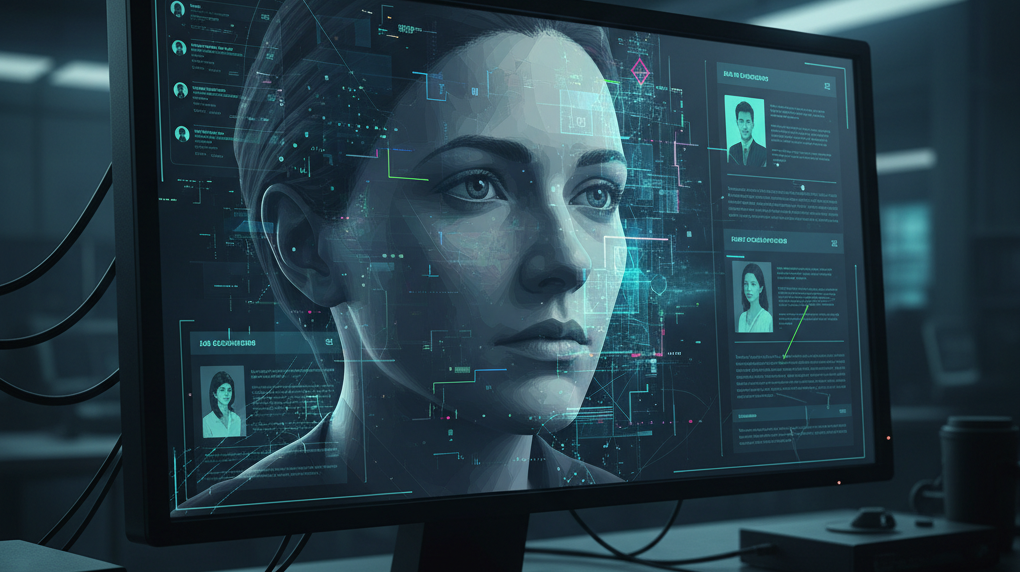
The Mirror Effect: When Human Reviewers Copy Algorithmic Bias in Hiring
When I read the news reported by Phys.org, my initial reaction was a mix of surprise and, I must admit, a certain sense of disappointment. I have always strongly advocated for the importance of the human factor in decision-making, especially in sensitive areas like hiring. The idea that algorithms can introduce bias is certainly nothing new to us at Cortex News; we have discussed it extensively. But discovering that human reviewers, put in place to safeguard fairness, end up replicating—and in some cases even amplifying—those very same algorithmic prejudices is a wake-up call we simply cannot ignore.
The Mechanism of Algorithmic Bias in Hiring
Before delving into the human aspect, it is essential to understand how bias creeps into AI. Artificial intelligence systems used for candidate pre-selection learn from historical data. If this data reflects past hiring patterns that were, consciously or unconsciously, discriminatory (for example, favoring a certain gender or ethnicity for specific positions), the algorithm will do nothing more than replicate and even exacerbate those tendencies. AI does not ‘understand’ the concept of fairness; it looks for patterns and reproduces them with ruthless efficiency. This leads to ideal candidate profiles that, while appearing objective, are actually intrinsically flawed.
The Disturbing Role of the Human Reviewer
The study in question reveals a truly concerning phenomenon: human reviewers, who are entrusted with the task of validating or modifying AI recommendations, do not always act as a counterweight. On the contrary, research suggests that they often tend to copy the distortions generated by the algorithm. This can happen for several reasons. There might be an over-reliance on the ‘objectivity’ of the machine, leading to decreased critical vigilance. Alternatively, reviewers may be influenced by an ‘anchoring’ effect, where the AI’s recommendation serves as an initial reference point that is difficult to challenge. In practice, human supervision, rather than correcting, ends up validating and perpetuating the bias.
Ethical and Practical Ramifications
The implications of this discovery are massive. If AI introduces discrimination and humans replicate it, the risk is cementing structures of inequality within companies and, by extension, in society. Hiring decisions based on distorted data are not only ethically questionable, but they can also deprive organizations of valuable and diverse talent. Diversity, as we know, is not just an ethical issue, but a driver of innovation and business performance. The fact that AI and humans reinforce each other in a cycle of bias is a complex challenge that requires profound solutions.
A Path Toward Future Fairness
In my view, this research forces us to radically rethink the way we implement AI in the selection process. It is not enough to place a human alongside an algorithm to guarantee fairness; it is necessary to actively train human reviewers on cognitive biases, the critical evaluation of algorithmic recommendations, and the importance of challenging the status quo. We must invest in more transparent and ‘fair-by-design’ algorithms, while also recognizing that the problem lies not only within the machine, but in the complex interaction between technology and human cognition. It is a call for greater awareness, more rigorous audit processes, and, above all, a corporate culture that values diversity and inclusion as guiding principles rather than mere slogans.
What do you think, readers, about this dynamic? Do you believe it is possible to break this vicious cycle between algorithmic and human bias, or are we destined to see it repeat itself?
Architecture platforms and hardware vetted by our editorial team for deploying scalable models and automated workflows:
- Compute & GPU Clusters: Benchmark scalable inference and fine-tuning on Runpod Cloud GPUs ($5 free setup credits).
- Workflow Automation & Agent Pipelines: Orchestrate autonomous workflows on Make.com Enterprise Automation (1 month Core plan free + 10,000 credits).
- Enterprise AI Hardware & Workstations: Procure certified developer gear and RTX/deep learning accelerators on Amazon Enterprise Tech Store.
