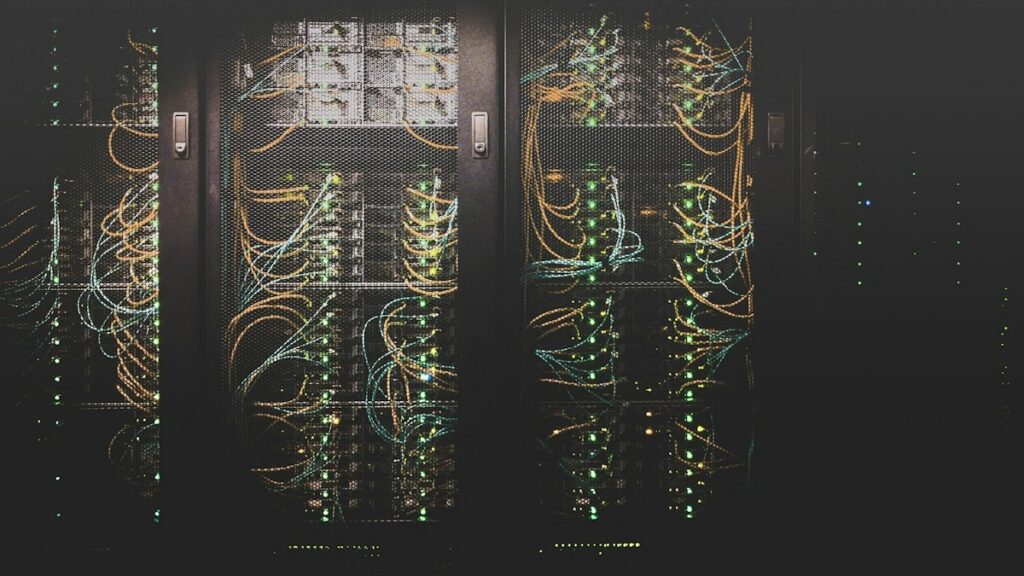
Systemic Risks in Accelerated Compute Data Center Infrastructure
- Financial commentaries from market analysts underscore rising capital expenditure scrutiny in accelerated compute data center footprints.
- Infrastructure architectures face severe capacity bottlenecks driven by power densities and capital intensity associated with silicon deployments from suppliers like Nvidia and Broadcom.
- Enterprise operators must balance rapid infrastructural scalability with stringent operational margin realities and long-term asset amortization cycles.
When analyzing the trajectory of capital allocation into high-performance compute environments, I find that financial commentaries regarding accelerated compute infrastructure expose critical vulnerabilities in modern data center planning, forcing both enterprise architects and capital allocators to re-evaluate the true Total Cost of Ownership of GPU-dense server clusters.
Capital Intensity and Power Density Constraints
From an infrastructure standpoint, the relentless push toward hyper-dense accelerators has fundamentally altered power delivery networks, thermal dissipation strategies, and floor-loading requirements within enterprise facilities. Examining recent market warnings highlighted in financial commentary, the primary friction point is no longer solely silicon availability, but rather the grid-level capacity and sub-station constraints required to sustain multi-megawatt cluster deployments. When tracing power distribution unit efficiencies and liquid-cooling retrofits, it becomes clear that physical data center architecture is struggling to keep pace with the thermal design power scaling dictated by next-generation silicon architectures.
Supply Chain Concentration and Interconnect Bottlenecks
From a systems engineering perspective, systemic risk is heavily concentrated around interdependent hardware ecosystems anchored by primary silicon vendors and high-speed networking providers like Nvidia and Broadcom. In reviewing supply chain telemetry and quarterly financial disclosures, the heavy reliance on proprietary networking fabrics and specialized transceivers creates single points of failure across the entire deployment pipeline. Enterprise operators attempting to scale distributed inference pipelines must account for lead times and capital expenditure volatility that can instantly invalidate multi-year capacity planning models.
| Infrastructure Component | Primary Architectural Challenge | Enterprise Mitigation Strategy |
|---|---|---|
| Power Distribution | Substation capacity and high rack-density thermal dissipation | Direct-to-chip liquid cooling and modular micro-grid integration |
| Interconnect Fabric | Proprietary switching dependencies and lead-time volatility | Standardized Ethernet fabrics and multi-vendor optical transceiver procurement |
| Capital Allocation | Accelerated hardware depreciation cycles versus ROI timelines | Hybrid cloud bursting and workload-specific inference optimization |
As I examine the broader macroeconomic and structural signals surrounding accelerated compute investments, enterprise leadership must transition from aggressive capacity acquisition to rigorous capital efficiency. How is your infrastructure team mitigating the risks of rapid hardware depreciation and power constraints in your next-generation cluster blueprints?
Architecture platforms and hardware vetted by our editorial team for deploying scalable models and automated workflows:
- Compute & GPU Clusters: Benchmark scalable inference and fine-tuning on Runpod Cloud GPUs ($5 free setup credits).
- Workflow Automation & Agent Pipelines: Orchestrate autonomous workflows on Make.com Enterprise Automation (1 month Core plan free + 10,000 credits).
- Enterprise AI Hardware & Workstations: Procure certified developer gear and RTX/deep learning accelerators on Amazon Enterprise Tech Store.
