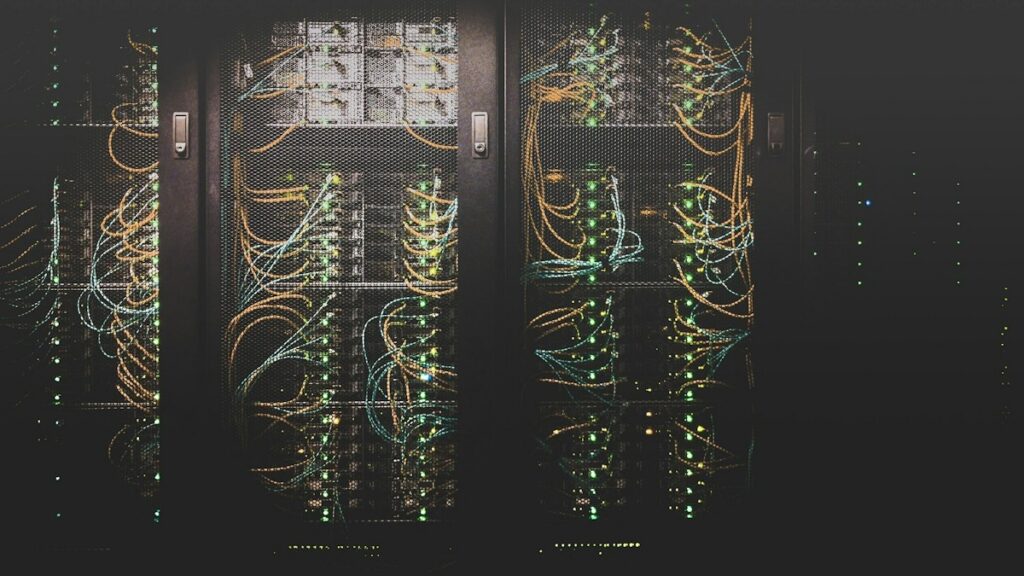
Nvidia vs. IonQ: The Reality of GPU vs. Quantum ROI
- Nvidia dominates near-term enterprise workloads with 85%+ AI market share and immediate GPU cluster throughput.
- IonQ represents a foundational shift toward algorithmic quantum computing, targeting high-complexity optimization tasks by 2026.
- FinOps analysis shows GPU infrastructure yielding measurable quarterly ROI, while quantum investments remain long-term R&D allocations.
When I first evaluated the shifting market dynamics between Nvidia’s high-throughput GPU architectures and IonQ’s trapped-ion quantum systems, I realized we are looking at a classic architectural bifurcation. Enterprise tech leaders must weigh immediate inference scalability against disruptive, exponential compute paradigms.
Technical & Architectural Deep Dive
From an engineering standpoint, comparing Nvidia’s CUDA-accelerated infrastructure to IonQ’s quantum processing units (QPUs) is not an apples-to-apples benchmark. Nvidia’s H100 and upcoming Blackwell architectures excel at parallel matrix multiplications, driving LLM inference and transformer model fine-tuning with predictable latency profiles. Conversely, IonQ utilizes trapped-ion technology to manipulate qubits with individual laser control, promising exponential speedups for complex combinatorial optimization, molecular simulation, and cryptographic mapping. However, the architectural reality today involves severe error-correction overhead and the necessity of hybrid classical-quantum execution pipelines.
Enterprise Impact, Security & Financial ROI
When reviewing IT budgets and FinOps strategies with enterprise chief technology officers, the financial calculus is stark. Deploying Nvidia hardware yields immediate, quantifiable productivity gains, reducing training times from weeks to hours and directly impacting bottom-line operational efficiency. IonQ, while revolutionary, demands a distinct capital expenditure profile suited for forward-thinking R&D labs and specialized financial modeling or pharmaceutical research teams. Security and compliance frameworks also diverge significantly; while GPU deployments fit neatly into established SOC2 and zero-trust cloud perimeters, integrating QPU cloud access requires careful data-transit governance and proprietary API management.
In my view, treating this as a binary choice is a strategic error. Enterprises should aggressively capture short-term operational ROI with mature GPU deployments while selectively prototyping hybrid workflows for tomorrow’s quantum breakthroughs. How is your engineering organization balancing immediate infrastructure costs against long-term quantum readiness?
Architecture platforms and hardware vetted by our editorial team for deploying scalable models and automated workflows:
- Compute & GPU Clusters: Benchmark scalable inference and fine-tuning on Runpod Cloud GPUs ($5 free setup credits).
- Workflow Automation & Agent Pipelines: Orchestrate autonomous workflows on Make.com Enterprise Automation (1 month Core plan free + 10,000 credits).
- Enterprise AI Hardware & Workstations: Procure certified developer gear and RTX/deep learning accelerators on Amazon Enterprise Tech Store.
