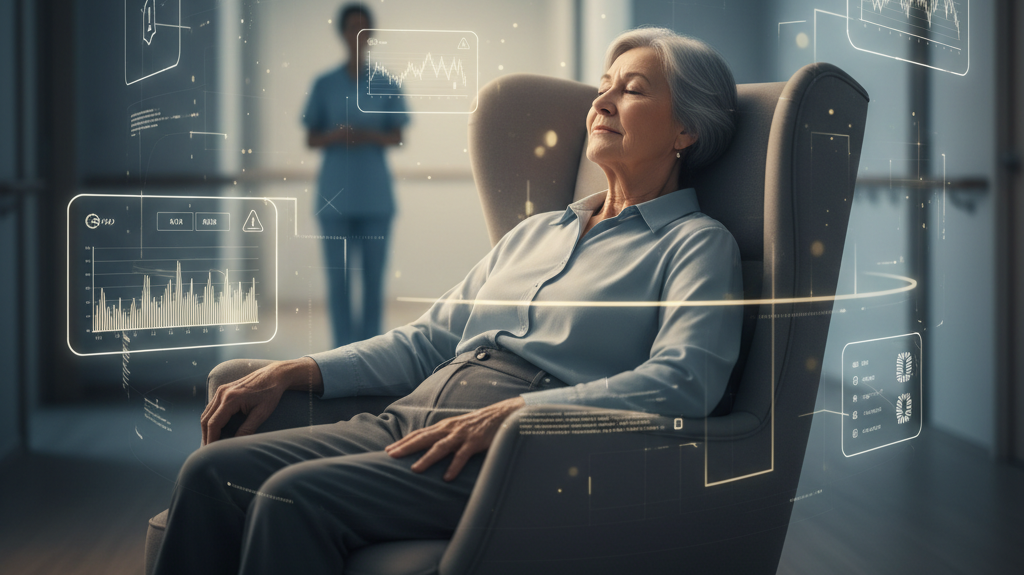
AI in Elder Care: Balancing Safety, Privacy, and Human Dignity
When I first read the news from Lycoming County, the idea of deploying artificial intelligence in a memory care facility instantly caught my attention. I felt a mix of hope and skepticism—are we truly ready to entrust such delicate aspects of life to machines? As I dug deeper, however, the complexity and potential of this application convinced me. In my view, this is not about replacement, but about augmentation—making daily life safer and, ultimately, much more dignified.
AI and Safety in Elder Care
At the core of this initiative is AI’s ability to provide discreet yet effective monitoring. Falls among the elderly, especially those suffering from cognitive decline, are a constant, harrowing concern. AI steps in as an extra pair of eyes—an early warning system that tracks behavioral patterns, detects anomalies, and predicts high-risk situations. A smart sensor learns an individual’s daily routine and flags unusual interruptions or movements hinting at an unstable balance. This passive monitoring is crucial because it preserves privacy, avoiding the intrusive nature of traditional cameras while guaranteeing robust protection.
How AI Operates in Sensitive Contexts
The underlying technology isn’t science fiction; it is the natural evolution of computer vision and machine learning. Utilizing non-invasive sensors (often radar or thermal imaging), the system gathers data on movement and positioning. AI algorithms process this data to identify dangerous scenarios—such as an elderly resident getting up at night and failing to return within a reasonable timeframe, prolonged immobility on the floor, or an unsteady gait. The goal is not to spy, but to construct a digital safety perimeter that triggers a silent alert for the staff, enabling timely, targeted intervention before a situation escalates.
The Ethical Dilemma: Technology vs. Human Touch?
Many, including myself, question the balance between technological efficiency and irreplaceable human warmth. It is a legitimate concern. Yet, I am firmly convinced that AI in this domain should never supplant personal interaction. On the contrary, it can liberate caregivers from purely reactive surveillance duties, empowering them to dedicate more quality time to human connection, recreational activities, and emotional support. AI handles “disaster prevention,” leaving professionals free to enrich the residents’ lives. The ethical challenge lies in ensuring these systems are engineered with an uncompromising focus on privacy, transparency, and individual dignity. Technology must amplify well-being, never forge a sterile environment.
Beyond Safety: Dignity and Quality of Life
The impact of these solutions extends far beyond simple fall prevention. Imagine the peace of mind experienced by a child knowing their parent is watched over by a system that never sleeps. Imagine the expanded autonomy a resident feels, knowing help will arrive swiftly if needed. This preserves personal dignity, dampens the anxiety tied to physical vulnerability, and fosters a profound sense of independence. In this context, AI transforms into a vital ally that elevates not only physical safety, but the overall quality of life within care facilities, fostering a more serene and proactive environment.
From an operational standpoint, and real-world deployment, adopting artificial intelligence in memory care facilities represents a significant and, in the long run, inevitable step forward. It stands as a shining example of how technology, when deployed with discernment and sensitivity, can be a potent force for good—enhancing the safety, dignity, and peace of mind of our society’s most vulnerable populations. It is certainly no silver bullet and will demand continuous ethical evaluations and adaptations, but the potential to positively transform care is immense. What are your thoughts? Do you view AI as a vital support system, or do you perceive greater risks in this delicate balance between tech and human care?
Architecture platforms and hardware vetted by our editorial team for deploying scalable models and automated workflows:
- Compute & GPU Clusters: Benchmark scalable inference and fine-tuning on Runpod Cloud GPUs ($5 free setup credits).
- Workflow Automation & Agent Pipelines: Orchestrate autonomous workflows on Make.com Enterprise Automation (1 month Core plan free + 10,000 credits).
- Enterprise AI Hardware & Workstations: Procure certified developer gear and RTX/deep learning accelerators on Amazon Enterprise Tech Store.
