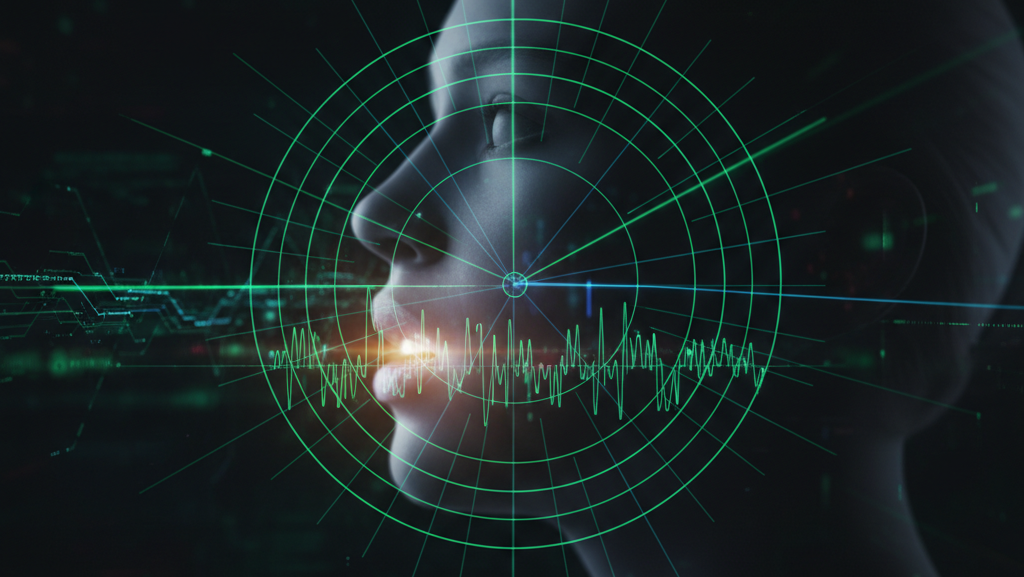
AI or Human? The Radar Exposing Voice Deepfakes
When I read the news that Arizona State University (ASU) researchers are using radar to distinguish the human voice from AI-generated speech, I immediately thought about how precarious authenticity has become in the digital age. In my view, this is not just another technological innovation; it is a potentially fundamental breakthrough in our struggle to maintain the distinction between what is real and what is artificial. In a world increasingly populated by deepfakes and algorithmically generated content, the ability to verify the source of speech becomes not only useful, but crucial.
The Growing Challenge of Vocal Authenticity
We all know how far artificial intelligence has progressed. Text-to-speech algorithms are now so sophisticated that they produce voices sounding remarkably human, capable of mimicking timbres, intonations, and even emotional nuances. This has opened the door to incredible opportunities, but also to significant risks. Consider audio deepfakes used for scams, disinformation, or undermining credibility. How can we trust what we hear if every voice can be replicated almost perfectly by a machine?
The Secret Behind the Human Voice: Micro-Movements
From an engineering perspective, this is where the ASU researchers’ approach proves ingenious. Instead of analyzing a voice’s acoustic properties—a domain where AI has surpassed human discernment—they focus on something much deeper and physical: the micro-movements of the human vocal tract. Every time we speak, our throat, mouth, tongue, and even facial muscles move in unique, nearly imperceptible ways. These are involuntary movements, a sort of intrinsic ‘biometric signature’ of human speech production.
How Does Radar Detection Work?
The technology being developed at ASU uses radar to detect these tiny, unique oscillations. A radar system can ‘see’ through tissue, recording the slightest displacements and vibrations. In practice, as a person speaks, the radar maps these physical movement patterns. AI-generated voices, however sonically perfect, are not produced by a physical body and consequently do not generate these vocal tract micro-movements. It is as if AI can paint a beautiful picture, but lacks the hands that actually created it.
The Impact on the Future: From Security to Truth
Analyzing the broader industry implications, the applications for such technology are vast. I envision scenarios where we could authenticate important calls with unprecedented security, knowing the voice on the other end is genuinely human. It could become an indispensable tool in combating voice deepfake scams, verifying identity in sensitive environments, or even ensuring the integrity of audio evidence. This is not just about knowing ‘who’ is speaking, but knowing ‘if’ a human being is speaking. To me, this marks the dawn of a new frontier in authenticity verification, shifting our focus from the audible to the tangible—or rather, the ‘detectable’.
In my opinion, this research is not merely a technological step forward; it is a foundational pivot for trust within our digital ecosystem. It grants us a tool to anchor ourselves in physical reality just as the virtual world becomes too convincing. I wonder how rapidly this technology can scale and what its ultimate impact will be on the future of communication and security. What do you think, Cortex News readers, about this new frontier in the battle between human and machine? Are you ready to trust the radar?
Architecture platforms and hardware vetted by our editorial team for deploying scalable models and automated workflows:
- Compute & GPU Clusters: Benchmark scalable inference and fine-tuning on Runpod Cloud GPUs ($5 free setup credits).
- Workflow Automation & Agent Pipelines: Orchestrate autonomous workflows on Make.com Enterprise Automation (1 month Core plan free + 10,000 credits).
- Enterprise AI Hardware & Workstations: Procure certified developer gear and RTX/deep learning accelerators on Amazon Enterprise Tech Store.
