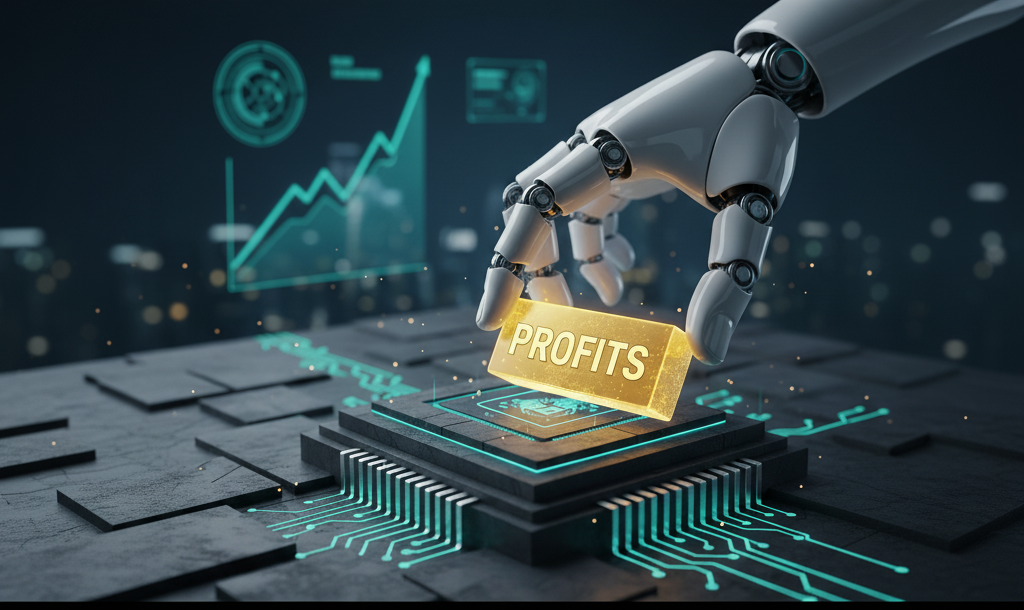
AI Investments: Powell Says No Bubble. It’s Real Growth With Profits
I was thinking about this exact topic a couple of weeks ago while chatting with a developer friend. The hype around artificial intelligence (AI) is through the roof, but we cannot ignore the ghost of the early-2000s dot-com bubble. Hearing Federal Reserve Chair Jerome Powell weigh in on the matter is a big deal. His argument is strong: current growth is backed by real earnings. Let me explain why this distinction is so crucial for the future of our investments and the tech sector.
Powell: AI investments are not a bubble, but solid growth with earnings
In the ever-evolving tech landscape, artificial intelligence (AI) has established itself as the dominant driving force, catalyzing massive investments and disrupting entire industries. However, unbridled enthusiasm has often raised a disturbing question among analysts and investors: are we facing a new speculative bubble, similar to the dot-com boom of the early 2000s? Stepping in to dispel these fears is none other than Federal Reserve Chair Jerome Powell, with statements aimed at reassuring the market: AI spending is not a bubble, unlike the dot-com boom, because the companies involved “actually have earnings.”
The distinction drawn by Powell is crucial and rests on a tangible economic foundation. During the dot-com era, many startups were valued in the billions based on future promises, ambitious visions, and irrational exuberance, but without consolidated business models or, more importantly, real profits. These were often companies burning through capital at a dizzying rate, hoping to achieve profitability that never materialized. The collapse was inevitable when reality collided with inflated expectations, leaving behind a trail of failures and disappointment.
The current AI context, according to Powell, is radically different. The leading companies driving investment and development in the sector are not purely speculative entities. Think of giants like NVIDIA, with its indispensable GPUs for training and running AI models; Microsoft and Google, which integrate AI into their cloud services and software suites, generating consistent revenue; or Amazon, which leverages AI to optimize logistics, personalize user experience, and offer machine learning services via AWS. These companies are not only spending huge amounts of capital on AI, but they are also deriving significant and demonstrable profits from it, integrating artificial intelligence into products and services that generate value for millions of users and other businesses.
AI spending, therefore, is not fueled by mere speculation on names or futuristic concepts, but by a profound and concrete transformation of business processes and tech offerings. AI is effectively improving efficiency, unlocking new capabilities, and creating market opportunities in sectors ranging from healthcare to finance, and from automotive to entertainment. Companies investing in AI do so with a clear strategy to improve their competitiveness and generate real returns, not just to inflate stock valuations. The AI ecosystem is vast, comprising software developers, data providers, specialized hardware manufacturers, and consultants—all links in a value chain that generates tangible transactions and profits.
Naturally, no market is immune to fluctuations or a certain degree of exaggeration. Some startups in the AI sector may be overvalued, and not all bets on artificial intelligence will pan out. However, the Fed Chair’s message is an invitation to distinguish substance from hype. The solid earnings base and proven business models of the sector’s key players give AI investments far greater resilience than the illusions of the dot-com bubble. For investors and businesses, this means that while maintaining a critical eye, the opportunities offered by AI rest on much more concrete and promising foundations for sustainable growth.
Our Take (And What Do You Think?)
In my view, this changes everything: Powell’s approach shifts the focus from speculation to intrinsic value. AI is no longer a “future” concept, but a “present” reality with active balance sheets. This means the real gamble is not if AI will grow, but which companies will best integrate the efficiency it generates into their profits. We need to study business models, not just hype. What do you think? Do you agree that earnings make AI immune to the dot-com crash, or do you still see hidden risks?
Architecture platforms and hardware vetted by our editorial team for deploying scalable models and automated workflows:
- Compute & GPU Clusters: Benchmark scalable inference and fine-tuning on Runpod Cloud GPUs ($5 free setup credits).
- Workflow Automation & Agent Pipelines: Orchestrate autonomous workflows on Make.com Enterprise Automation (1 month Core plan free + 10,000 credits).
- Enterprise AI Hardware & Workstations: Procure certified developer gear and RTX/deep learning accelerators on Amazon Enterprise Tech Store.
