Enterprise AI Expenditure Alleviates Market Anxieties
- Robust financial metrics from primary corporate earnings reports alleviate long-standing market anxieties regarding the long-term sustainability of aggressive enterprise AI capital expenditure.
- From an infrastructure standpoint, sustained capital allocation secures uninterrupted supply chains for high-performance silicon and ultra-scale cloud compute nodes.
- FinOps leadership must recalibrate forecasting models to accommodate sustained infrastructural outlays without compromising operational margins.
When tracing the current financial telemetry of major market players, I find that recent quarterly earnings reports decisively dismantle prevailing skepticism surrounding enterprise artificial intelligence budgets. As market analysts weigh the multi-trillion-dollar trajectory of market leaders like SpaceX, Nvidia, and Alphabet, my review of corporate disclosures confirms that tangible infrastructure monetization is actively neutralizing fears of an impending investment plateau.
Silicon Allocation and Infrastructure Resiliency
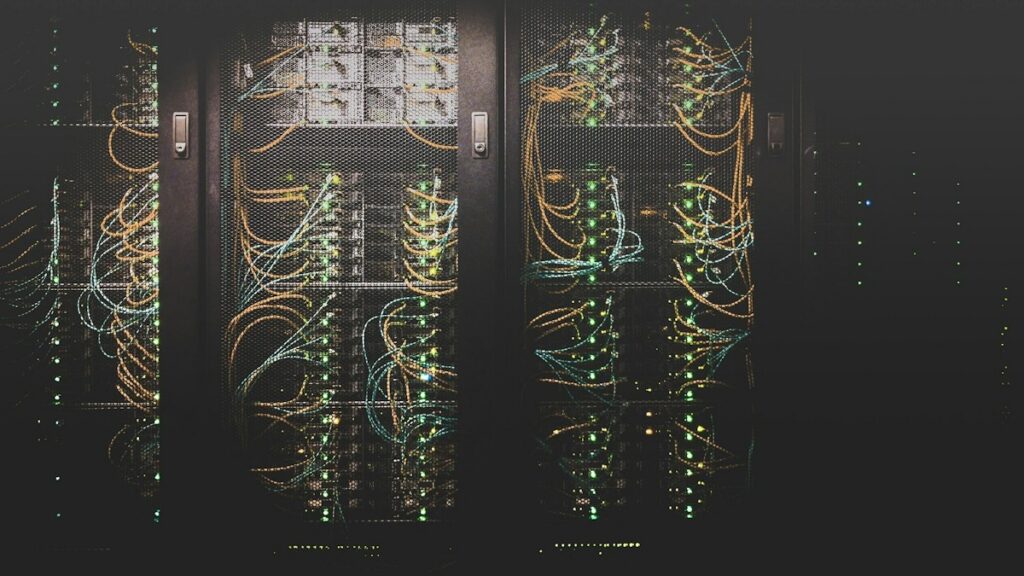
From an infrastructure standpoint, the sheer scale of capital deployed into advanced compute clusters demands a rigorous examination of return on investment. Examining recent financial disclosures from primary semiconductor and cloud entities reveals that capital expenditure is not speculative; it is directly tethered to verifiable enterprise demand for accelerated computing. When evaluating GPU cluster orchestration and high-density data center build-outs, the underlying revenue streams validate the massive upfront costs. Hardware procurement cycles remain aggressively accelerated, proving that production workloads are scaling to consume available capacity rather than sitting idle in amortized depreciation schedules.
FinOps Strategies for Accelerated Capital Expenditure
Moving from the server rack to the enterprise balance sheet, operationalizing these massive infrastructure investments requires tight alignment between engineering leadership and financial controllers. In my discussions with enterprise systems architects, the primary challenge is no longer securing executive sign-off for AI pilots, but rather managing continuous inference costs and cluster utilization rates. Organizations that fail to implement strict FinOps telemetry risk margin erosion, even as top-line revenues expand. Sustained expenditure is only viable when automated workload scheduling and dynamic resource allocation prevent idle capacity across heterogeneous multi-cloud environments.
| Corporate Entity | Primary Investment Vector | Infrastructure Focus | Financial Sustainability Indicator |
|---|---|---|---|
| Nvidia | Accelerated Computing Silicon | Next-Gen GPU Architecture & Interconnects | Record Gross Margins & Demand Backlog |
| Alphabet | Hyperscale Cloud & TPU Clusters | Custom Silicon Integration & Edge AI | Robust Ad Revenue & Cloud Profitability |
| SpaceX | Satellite Constellations & Launch | Low-Latency Global Network Topology | Commercial Contract Backlog & Expansion |
As we look toward the horizon of multi-trillion-dollar valuations, the convergence of robust financial performance and relentless technological scaling suggests that enterprise AI is transitioning from a speculative frontier into a fortified operational bedrock. How is your engineering organization adjusting its capacity planning to match these aggressive capital deployment cycles?
Architecture platforms and hardware vetted by our editorial team for deploying scalable models and automated workflows:
- Compute & GPU Clusters: Benchmark scalable inference and fine-tuning on Runpod Cloud GPUs ($5 free setup credits).
- Workflow Automation & Agent Pipelines: Orchestrate autonomous workflows on Make.com Enterprise Automation (1 month Core plan free + 10,000 credits).
- Enterprise AI Hardware & Workstations: Procure certified developer gear and RTX/deep learning accelerators on Amazon Enterprise Tech Store.
