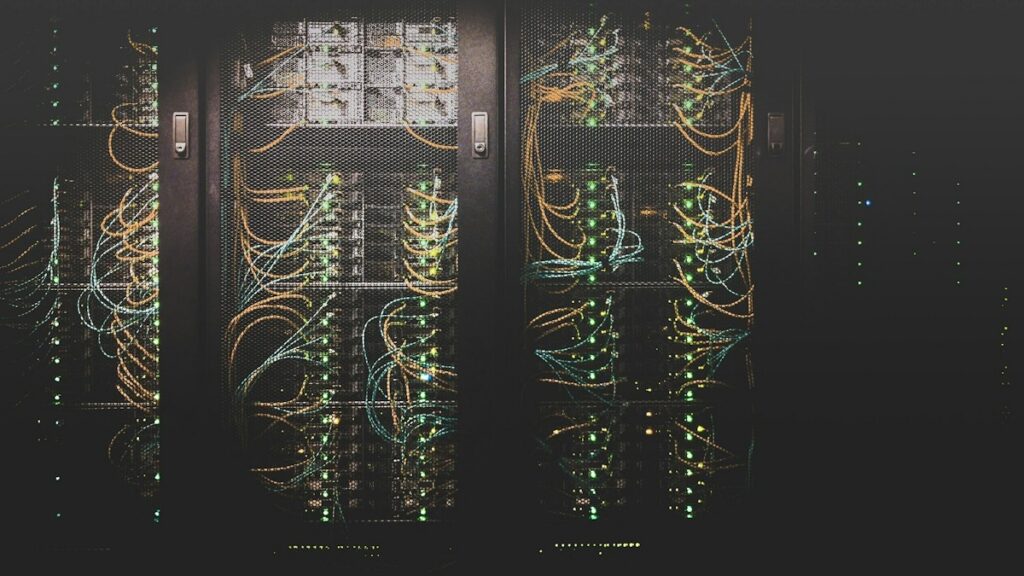
Nvidia Valuation Metrics Amid Surging Infrastructure Demand
- Hyperscale financial filings and market analysis indicate unusual valuation dynamics heading into earnings.
- Surging enterprise infrastructure demand continues to stress compute allocation and supply chains.
- FinOps teams must reassess total cost of ownership models as pricing dynamics shift.
From an infrastructure standpoint, evaluating Nvidia’s current market valuation requires examining underlying compute demand rather than traditional trailing multiples alone. When analyzing recent financial reports and hyperscale capital expenditure trends, the disconnect between top-line infrastructure growth and valuation metrics reveals critical insights for enterprise architects.
Compute Capacity Constraints and Hyperscale CapEx
In my review of recent earnings data and hardware deployment pipelines, the primary bottleneck remains physical cluster provisioning rather than software readiness. Enterprise data centers are heavily prioritizing high-density GPU nodes to support large-scale inference and training workloads. This unprecedented capital expenditure cycle by hyperscalers directly impacts hardware availability, altering procurement cycles and forcing organizations to optimize their existing compute footprints through quantization and efficient memory management.
Financial Metrics Versus Infrastructure Realities
When tracing the network topology of modern AI factories alongside corporate financial filings, a compelling paradox emerges. While top-tier hardware commands premium pricing, the corresponding earnings yield creates a valuation profile that prompts questions regarding long-term margin sustainability. Engineering leaders must balance the immediate operational need for accelerated compute against the macroeconomic realities of data center power constraints, cooling limits, and long-term hardware depreciation schedules.
| Parameter | Legacy Architecture | Hyperscale AI Infrastructure |
|---|---|---|
| Primary Workload | Relational Databases, CRUD | Parallelized Transformer Training/Inference |
| Power Density per Rack | 7kW – 12kW | 40kW – 100kW+ (Liquid Cooling Required) |
| Interconnect Latency | 10GbE / 25GbE Standard | InfiniBand / NVLink Ultra-Low Latency Fabric |
Ultimately, navigating this financial and architectural landscape demands a holistic view that unites cost engineering with hardware performance. How is your infrastructure team adjusting compute budgets to account for fluctuating hardware valuations and shifting capacity demands?
Architecture platforms and hardware vetted by our editorial team for deploying scalable models and automated workflows:
- Compute & GPU Clusters: Benchmark scalable inference and fine-tuning on Runpod Cloud GPUs ($5 free setup credits).
- Workflow Automation & Agent Pipelines: Orchestrate autonomous workflows on Make.com Enterprise Automation (1 month Core plan free + 10,000 credits).
- Enterprise AI Hardware & Workstations: Procure certified developer gear and RTX/deep learning accelerators on Amazon Enterprise Tech Store.
