AMD Helios Rack Launch Challenges Nvidia Dominance
- AMD introduces the Helios rack architecture to directly challenge Nvidia’s proprietary rack-scale hardware dominance in enterprise data centers.
- The platform shift moves the competitive battleground from individual silicon accelerators to integrated, rack-level power, cooling, and network topologies.
- Enterprise infrastructure teams face new multi-vendor deployment considerations as alternative high-density AI clusters reach production maturity.
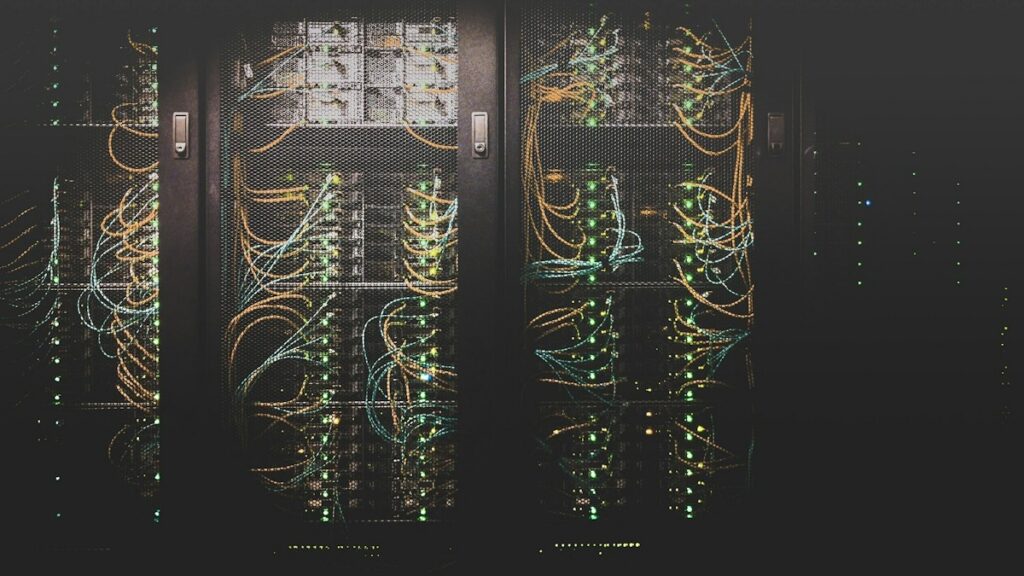
From an enterprise infrastructure standpoint, AMD’s introduction of the Helios rack platform marks a critical architectural pivot, moving the competitive battleground with Nvidia away from isolated accelerator silicon and directly into fully integrated, rack-scale data center deployment models.
Redefining Rack-Scale Engineering and Thermal Envelopes
When evaluating modern AI infrastructure, individual GPU compute throughput represents only a fraction of the total operational equation. Power delivery density, thermal dissipation profiles, and inter-node interconnect topologies dictate the true performance ceiling of production clusters. According to recent industry announcements, the Helios architecture seeks to address these rack-level bottlenecks by combining high-density AMD accelerators with optimized switching and power topologies. In my analysis of modern enterprise topologies, proprietary rack designs have historically locked organizations into single-vendor ecosystems. The introduction of Helios forces a re-evaluation of data center floor space, liquid cooling readiness, and electrical distribution unit (EDU) capacities to support high-density multi-node compute clusters.
Enterprise Procurement and Multi-Vendor Infrastructure Strategy
From an operations and FinOps perspective, shifting from standalone server procurement to turnkey rack systems introduces distinct provisioning challenges. Infrastructure teams must now design validation pipelines that accommodate mixed-vendor cluster environments, heterogeneous software toolchains, and divergent telemetry monitoring agents. Standardizing deployment automation across both Nvidia-centric clusters and emerging AMD Helios racks requires rigorous API abstraction layers to prevent vendor lock-in at the orchestration level. Furthermore, facilities management teams must ensure that datacenter floor layouts can seamlessly integrate alternative busbar designs and manifold configurations without disrupting existing uptime SLAs.
| Architecture Dimension | Nvidia Rack Ecosystem | AMD Helios Platform |
|---|---|---|
| Primary Integration Scope | Proprietary NVLink switch trays & custom compute nodes | Open-standards-aligned rack density & scalable fabric |
| Cooling Requirements | Advanced liquid-to-air and direct-to-chip options | Optimized thermal envelopes for data center retrofitting |
| Ecosystem Approach | Vertically integrated hardware and software stack | Modular components for flexible enterprise integration |
As enterprise data centers evolve to support hyper-scale inference workloads, the success of platforms like Helios will depend heavily on software maturity and seamless orchestration integration. How is your engineering team planning to balance multi-vendor hardware diversification with the operational overhead of unified cluster management?
Architecture platforms and hardware vetted by our editorial team for deploying scalable models and automated workflows:
- Compute & GPU Clusters: Benchmark scalable inference and fine-tuning on Runpod Cloud GPUs ($5 free setup credits).
- Workflow Automation & Agent Pipelines: Orchestrate autonomous workflows on Make.com Enterprise Automation (1 month Core plan free + 10,000 credits).
- Enterprise AI Hardware & Workstations: Procure certified developer gear and RTX/deep learning accelerators on Amazon Enterprise Tech Store.
