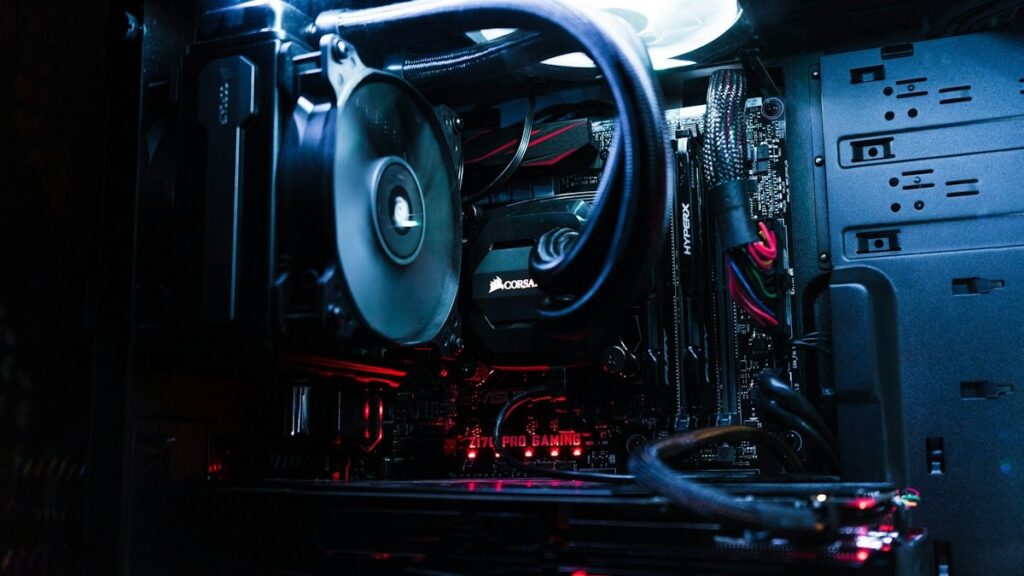
System76 Thelio Mira AI: AMD Ryzen & Discrete GPUs
- System76 officially unveiled the Thelio Mira AI workstation, leveraging high-performance AMD Ryzen processors as detailed in primary hardware announcements from Phoronix.
- The hardware configuration pairs multi-core x86 compute complexes with discrete NVIDIA or AMD graphics accelerators for high-density local model training.
- From an infrastructure standpoint, deploying dedicated local compute nodes mitigates cloud egress latency and data sovereignty risks for on-premises development teams.
In my review of the hardware specifications, System76’s Thelio Mira AI workstation establishes a compelling new local compute footprint by pairing high-core-count AMD Ryzen processors with heavy-duty NVIDIA or AMD graphics options, bridging the gap between desktop form factors and local deep learning infrastructure.
Architectural Integration of AMD Ryzen and Discrete Accelerators
When analyzing the platform configuration, the convergence of AMD Ryzen CPUs with high-throughput discrete graphics hardware offers a distinct advantage for localized model iteration. From an infrastructure standpoint, localizing model fine-tuning and inference pipelines eliminates the persistent network latency inherent in round-trip cloud API calls. By bypassing remote virtualization layers, developers gain unthrottled access to PCIe lanes and direct memory architectures, ensuring maximum data throughput when pushing tensors across system and device memory boundaries.
Enterprise Workstation Scaling and On-Premises Isolation
When tracing the operational lifecycle within engineering organizations, relying entirely on public cloud infrastructure often introduces unpredictable cost spikes and strict data governance compliance hurdles. Implementing desktop-class AI hardware like the Thelio Mira AI allows teams to sandbox sensitive enterprise training datasets locally. This air-gapped approach satisfies stringent security requirements while maintaining predictable hardware amortization schedules, avoiding the variable OPEX models dictated by hyperscale cloud providers.
| Component Layer | Thelio Mira AI Target Architecture | Enterprise Infrastructure Benefit |
|---|---|---|
| Compute Core | High-Performance AMD Ryzen Processors | High core-count concurrency for data preprocessing pipelines |
| Acceleration Layer | Discrete NVIDIA or AMD Graphics Hardware | High-density parallel processing for local LLM fine-tuning |
| Deployment Topology | On-Premises Desktop Workstation | Elimination of cloud egress fees and strict data sovereignty compliance |
Ultimately, workstations configured for dedicated local AI computation represent a strategic shift away from total cloud dependency for early-stage model development. As engineering organizations grapple with escalating infrastructure costs and complex data privacy regulations, hardware platforms bridging raw compute density with localized ownership will become foundational. How is your infrastructure team balancing local workstation compute against cloud-native orchestration for your upcoming machine learning workloads?
Architecture platforms and hardware vetted by our editorial team for deploying scalable models and automated workflows:
- Compute & GPU Clusters: Benchmark scalable inference and fine-tuning on Runpod Cloud GPUs ($5 free setup credits).
- Workflow Automation & Agent Pipelines: Orchestrate autonomous workflows on Make.com Enterprise Automation (1 month Core plan free + 10,000 credits).
- Enterprise AI Hardware & Workstations: Procure certified developer gear and RTX/deep learning accelerators on Amazon Enterprise Tech Store.
